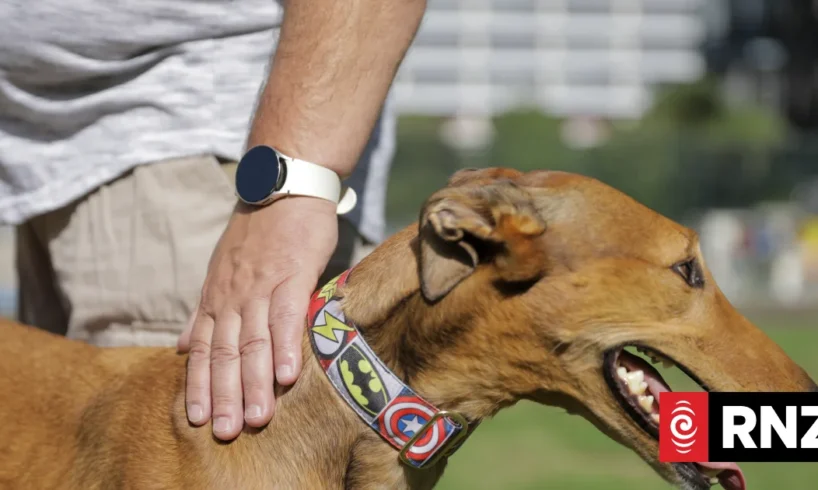
The SPCA says it is not currently calling for the greyhound racing ban to extend to other racing codes.
New Zealand’s ban on commercial greyhound racing will officially take effect from the end of July.
In its submission on the Closure of Greyhound Racing Industry Amendment Bill, the SPCA said it did not take calls for industry bans lightly.
“As an animal welfare organisation, we consider that it is acceptable to use animals for human purposes provided they have a good life, with opportunities for positive welfare,” it said.
“Where our organisation advocates for changes to the way animals are used, SPCA typically engages directly with stakeholders to improve animal welfare outcomes while the activity continues.
“We do so successfully in other similar contexts; for example, we work successfully with the rodeo industry and the thoroughbred and harness racing codes.”
When asked if the organisation would like to see the ban extended to other racing codes, the SPCA’s senior scientific officer, Dr Alison Vaughan, said that was not something it was calling for.
That’s in spite of the animal welfare group’s public opposition to jumps racing.
On its website, the SPCA said it opposed jumps races, such as steeplechase and hurdling, because of the negative impacts on the horse’s physical, health, and behavioural needs.
“Jumps races are associated with higher risk of injuries and fatalities than flat races. SPCA advocates for the prohibition of such races as it is not possible to adequately mitigate the risks involved,” its website said.
Vaughan said its main focus was ending commercial greyhound racing.
“Our position on jumps racing is publicly available, but our engagement with the government at this moment in time is focused on supporting the implementation of the greyhound racing ban and a successful transition for these dogs,” she said.
“One of the reasons greyhound racing became a focus was that the industry was placed on notice by the government after the Robertson review in 2021 found ongoing issues with transparency, data recording and animal welfare generally, and that was the third damning review in a decade,” Vaughan said.
“We also found that the greyhound racing industry was not willing to engage meaningfully in improvements, and while they did have the opportunity to demonstrate improvements,” she said.
The SPCA says it is not currently calling for the greyhound racing ban to extend to other racing codes.
PHOTOSPORT
In perhaps a rare sign of agreement, the head of Greyhound Racing New Zealand is also against the ban extending to other racing codes.
Edward Rennell – who is the former chief executive of Harness Racing New Zealand – said he believed the industry provided a wonderful contribution to the economy.
“I think there is no basis for the closure of thoroughbred, harness or greyhound racing,” he said.
Rennell believed the greyhound racing ban was politically motivated.
“The euthanasia rate for dogs getting injured during races is half that of a thoroughbred code. So, we believe it’s a purely political decision, not based on, you know, facts,” he said.
“We’ve lowered the race day euthanasia rate. We’re the only racing code in New Zealand with an effective and comprehensive rehoming programme. We believe our injury rate is lower than Australia.
“So we believe there are no grounds for the closure of racing, but at the end of the day, it’s a political decision on the basis that there’s more votes in getting rid of greyhound racing than there is in keeping it.”
Vaughan said the SPCA remained concerned about the export of New Zealand greyhounds to continue their lives as racing dogs in other countries.
Major airlines departing from New Zealand – including Air NZ and Qantas – had clear policies against accepting greyhounds to transport for racing, she said.
But that may not stop racing dogs from being exported.
“There has been talk from Greyhound Racing New Zealand of organising charter flights to move greyhounds from New Zealand to race in other jurisdictions, and we are very concerned about this.”
Vaughan said the SPCA was not involved in rehoming the estimated 1500 greyhounds in the industry.
“That’s currently going through the four industry-funded greyhound rehoming agencies, and the industry has not shared with us how the rehoming efforts are going,” she said.
In a statement, a spokesperson for the Racing Minister, Winston Peters, said the industry closure was proceeding as planned, and a rehoming programme would be launched shortly.
“The Minister has received no advice on ending jumps racing. Note, the greyhound decision is completely independent of other racing codes.”
The Greyhound Transition Agency was approached for comment.