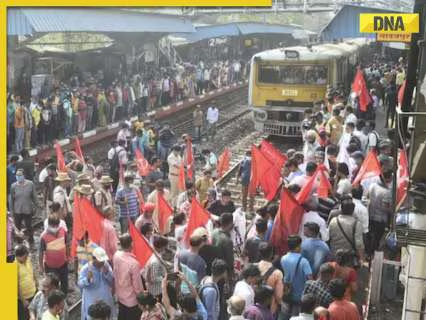
India will experience significant disruptions on February 12, 2026, due to a nationwide strike, Bharat Bandh, called by trade unions and farmers’ organisations. Public sector banks, transport, markets and government offices may be affected.
India is likely to experience significant disruption on February 12, 2026, with a nationwide strike, known as Bharat Bandh, being called by central trade unions and farmer organisations. The strike is expected to impact various sectors, including public sector banks, government offices, transport services, and markets across several states. The call for the shutdown stems from opposition to new labour laws, privatisation policies, and the proposed India–US trade deal.
Reason Behind Bharat Bandh 2026
A joint forum of 10 central trade unions, including groups such as INTUC, AITUC, CITU and SEWA, has announced the strike to protest against the four labour codes that replaced 29 existing labour laws last year. These unions argue that the new codes erode workers’ rights, weaken job security, and make it easier for employers to hire and fire staff at will. The strike also opposes privatisation, issues surrounding wages, and the lack of social security for workers.
In addition to the labour codes, unions are demanding the withdrawal of several government bills, including the Draft Seed Bill, the Electricity Amendment Bill, and the SHANTI Act (Sustainable Harnessing and Advancement of Nuclear Energy for Transforming India). They are also calling for the restoration of the MGNREGA (Mahatma Gandhi National Rural Employment Guarantee Act) and the scrapping of the Viksit Bharat – Guarantee for Rozgar and Ajeevika Mission (Gramin) Act, 2025.
Impact on Educational Institutions and Public Sector
While there is no official announcement regarding the nationwide closure of schools and colleges, educational institutions in states such as Kerala, Karnataka and Odisha may remain closed, depending on local conditions and transport disruptions. Parents and students are advised to stay updated through official communications from their schools and colleges.
Banking Sector Disruptions
Public sector banks are expected to be hit by the strike, as bank employees and officers have confirmed their participation. Major unions such as the All India Bank Employees Association (AIBEA) and BEFI have joined the strike, and as a result, services in public sector bank branches, including cheque clearances, deposits, and withdrawals, could face delays.
Although banks like State Bank of India (SBI) and IDBI Bank have warned of potential disruptions, they have not declared the day a public holiday, so branches will remain open with partial service interruptions. Private banks may continue operations, though service availability will vary depending on location.
Transport and Market Disruptions
Transport services, particularly public buses and trains, may experience delays or stoppages in some regions due to protests or road blockages (chakka jams). Markets and shops in protest-affected areas are also expected to remain closed. Government offices in several states may see reduced attendance or closure based on employee participation.
However, emergency services, including hospitals and ambulances, are expected to remain operational throughout the day. Essential services like airports and utilities are also expected to function, though travellers are advised to leave early to avoid traffic delays caused by road blockades.
Farmers’ Support for Bharat Bandh
Farmers’ organisations, including Samyukt Kisan Morcha (SKM) and the All India Kisan Sabha (AIKS), have lent their full support to the strike, raising concerns over the India–US trade deal. SKM has criticised the trade agreement, claiming it could expose Indian agriculture to foreign exploitation. The farmers believe that the deal would allow the import of agricultural products like dairy, animal feed and soybean oil, which could harm domestic farmers and lead to long-term negative impacts on India’s agricultural and dairy sectors.
The SKM also called for the resignation of Commerce Minister Piyush Goyal, accusing him of misleading farmers about the inclusion of dairy products in free trade agreements with countries like the UK, New Zealand and the European Union.
The Bharat Bandh on February 12, 2026, represents a united protest by labour unions, farmer groups, and other sectors against government policies they believe undermine worker rights, agricultural interests and economic fairness. As the strike gains momentum, citizens are advised to prepare for potential disruptions across the country, including in public services, transport, and educational institutions.