After postponing the appointment of a rapporteur and practically halting progress on the government’s bill to end Brazil’s six-day-on, one-day-off workweek system for a month, Lower House Speaker Hugo Motta eventually reached an agreement with the government to advance the proposal.
The bill is expected to be approved either together with, or shortly after, a proposed constitutional amendment that addresses the same issue.
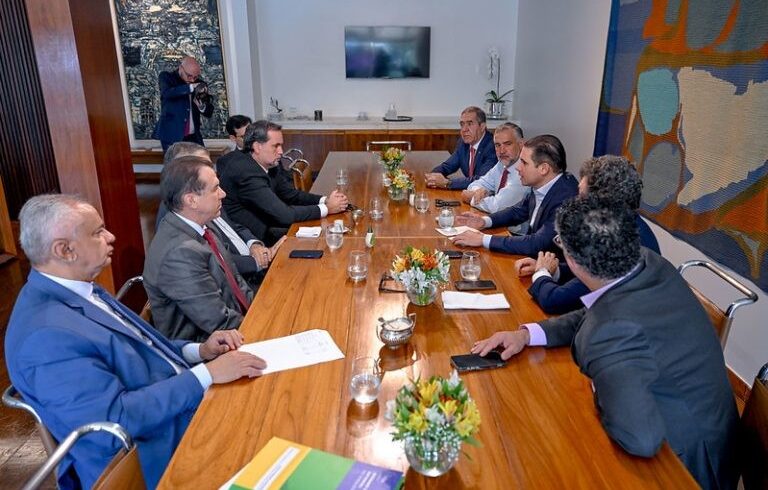
The agreement was negotiated during a Wednesday morning meeting with Motta, Institutional Relations Minister José Guimarães, Labor Minister Luiz Marinho, and other representatives from the executive and legislative branches.
In a social media post, Motta said the government bill would address adapting labor legislation to the constitutional changes proposed by the amendment.
“We also agreed that the bill submitted by the executive branch will be necessary to adapt labor legislation to the constitutional changes we intend to make through the reduction of working hours,” he said in a video message.
Under the arrangement agreed upon at the meeting, the bill submitted by President Lula on April 14 would govern specific situations involving workers in sectors such as healthcare, public security, and oil production.
Meanwhile, the constitutional amendment would address the points deemed nonnegotiable by both the government and the Lower House leadership, such as lowering the legal workweek from 44 to 40 hours, guaranteeing two days of rest per week, and banning salary cuts.
According to Luiz Marinho, the agreement will provide legal certainty both for workers and businesses.
The labor minister also told reporters that once the constitutional amendment is approved, Motta is expected to accelerate the bill’s passage through the legislative process.
Marinho reiterated that there will be no financial compensation for companies affected by the reduction in working hours.
He argued that productivity gains would arise from the new work environment created by adopting a five-on, two-off schedule. “The gains are real and concrete, and we need to make this bet,” he said.
Until now, Motta had been trying to secure approval of the constitutional amendment in both the special committee analyzing the proposal and on the House floor before the government bill could begin blocking the legislative agenda.
The government submitted the bill under Brazil’s constitutional urgency mechanism, which requires Congress to analyze the proposal within 45 days—a deadline that expires on May 29.
Behind the scenes, lawmakers were also concerned about who would receive political credit for the proposal.
While the constitutional amendment would position Motta as its main political architect, the bill itself bears Lula’s signature.
In Motta’s assessment, the constitutional amendment was also the more appropriate legal instrument for addressing the issue because it would allow broader negotiations and the development of a consensus text through a longer legislative process and multiple stages of debate in Congress.
Speaking on Wednesday during a hearing in the congressional committee discussing the issue, the Presidential Secretary Minister Guilherme Boulos said the decision to advance both the bill and the constitutional amendment simultaneously was intended to prevent the proposal from stalling in the Senate.
According to him, if only the constitutional amendment advanced, there would be no guarantee that the Senate would continue to process the proposal.
“With the urgent bill also approved here, the Senate will have 45 days to vote on it,” he said.
Business groups linked to the retail and productive sectors fear the economic impact of the proposal and argue that the issue should not be voted on this year to avoid contamination from the electoral debate.